
One shoe size does not suit every runner. Many runners feel pinching, rubbing or numb toes halfway through a parkrun and blame the miles. The real cause is often shoe width. Wide fit trainers give the front of your foot more room, so your toes can spread naturally with every stride. This guide covers how width sizing works, how to measure your feet at home and which brands make wide fit running shoes.
Wide Fit Trainers Explained
Wide fit trainers are running shoes built with extra space across the ball of the foot. The ball of the foot is the broad area just behind your toes. This is the part of the foot that spreads most when you land.
Standard trainers suit an average foot shape. Wide fit trainers use a broader last, which is the foot-shaped mould a shoe is built around. That wider mould gives the upper more volume without changing the length of the shoe.
Wide fit running shoes are not a niche product. Many runners fall into a wider width without realising it, because shoe shops stock standard widths first.

Signs You Need Wide Fit Running Shoes
Your feet will usually tell you before a measurement does. Look out for these signs:
- The upper bulges over the edge of the sole when you stand up.
- Your little toe or big toe presses against the side of the shoe.
- Your toes tingle or go numb after 20 to 30 minutes of running.
- Blisters or corns appear on the sides of your feet or toes.
- Your feet feel pinched across the middle, even in a shoe of the right length.
- Shoes feel fine in the shop but tight by the end of a long run.
One or two of these signs can come from poor lacing or worn shoes. Three or more usually point to a width problem.
Wide Fit Width Codes for Men and Women
Shoe brands label width with letters. The letters differ between men's and women's shoes, which is where most of the confusion starts.
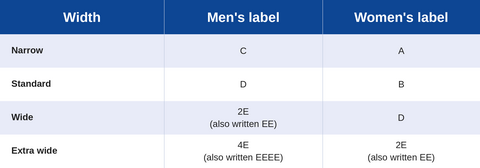
A wide fit women's trainer is usually labelled D. The same letter means standard width in a men's shoe. If you buy across the men's and women's ranges, check the label carefully.
Brands also print width in different places. Some show it in the product name, such as "Wide" or "2E". Others list it as an option on the size selector. The size guide on each product page gives the exact detail.
How Much Extra Room a Wide Fit Adds
Each step up in width adds roughly 3mm to 6mm (about 1/8 to 1/4 inch) across the widest part of the shoe. That sounds small, but it changes how a shoe feels over an hour of running.
The exact gap varies between brands and even between models from the same brand. A 2E in one shoe can feel roomier than a 2E in another. For that reason, treat the letter as a starting point and the fit as the final test.
Wide Fit vs Wide Toe Box Trainers
Wide fit and wide toe box are related, but they are not the same thing.
Wide fit means the whole forefoot area is built to a wider width. The shoe usually comes in a labelled width such as 2E or D.
Wide toe box describes the shape at the front of the shoe. A roomy toe box gives your toes space to spread, but the shoe may still come in a standard width label.
Some runners need only a roomy toe area. Others need extra width across the ball of the foot as well. If your toes feel cramped but the midfoot feels fine, a wide toe box shape may be enough. If the sides of the foot feel squeezed, a labelled wide fit is the better choice.

Benefits of Wide Fit Trainers
The main benefit is simple: your foot gets the space it needs. That space leads to several practical gains for training.
- Fewer blisters and corns. Less pressure on the sides of your foot means less friction against the upper.
- Natural toe splay. Your toes spread on landing, which helps stabilise each footstrike.
- Better circulation. A roomier upper reduces numbness and tingling on long runs.
- Room for swelling. Feet expand over distance, and a wide fit absorbs that change without pinching.
- Easier long runs. A shoe that fits well lets you focus on pace and effort instead of foot pain.
Wide Fit vs Regular Trainers for Comfort
Wide fit trainers are more comfortable for runners with broader feet. Regular trainers are more comfortable for runners with average or narrow feet. The right shoe is the one that matches your foot shape.
For a broader foot, the differences show up in five areas:
A wide fit spreads load across a larger area of the forefoot. Tight regular trainers concentrate that load on the edges of the toes and the sides of the foot.
A roomier shoe reduces rubbing, which lowers the chance of blisters, corns and calluses.
A tight upper can restrict blood flow and contribute to foot cramps. A wide fit gives the muscles room to flex and relax.
Runners with bunions or hammertoes often find that extra forefoot volume reduces irritation. A bunion is a bony bump at the base of the big toe. A hammertoe is a toe that bends downward at the middle joint. Runners with persistent pain should speak to a podiatrist.
Extra room matters most on long runs, hot days and race day.

Wide Fit Running Shoe Brands
Several major running brands offer wide options across their road ranges. Availability changes by model and season, so check the width options on each product page.
Brooks offers wide versions of many core models. The Ghost suits everyday neutral running, and the Adrenaline GTS adds stability for runners whose feet roll inwards. The Glycerin gives a softer, cushioned ride for longer miles.
Hoka combines high cushioning with a broad platform. Models such as the Clifton and Bondi are available in wide versions, which helps on long road runs.
New Balance is known for offering several width options across its road range. Fresh Foam models often come in standard, wide and sometimes extra wide, which gives runners more choice.
ASICS makes wide options for models like the Gel-Nimbus and Gel-Kayano. The Kayano adds stability, and the Nimbus focuses on cushioning.
Each brand shapes its toe box differently. Trying two or three brands is the quickest way to find the shape that suits your foot.
Best Wide Fit Trainers by Type of Runner
The best wide fit trainer depends on your terrain, distance and pace. Here is a starting point for each type of runner.
Choose a cushioned neutral shoe in a wide fit, such as the Brooks Ghost. Comfort matters most while your feet and legs adapt to regular running.
Pick a durable daily trainer with a roomy toe box. A shoe that handles wet pavements and stop-start miles works best.
Look for a balance of cushioning and response. A wide fit gives your feet space as the distance climbs past 10 miles.
Prioritise cushioning and room for swelling. The Brooks Glycerin, ASICS Gel-Nimbus and Hoka Bondi are popular choices in wide fits.
Look for a trail shoe with a secure heel and a roomy forefoot. The Brooks Cascadia is a well-known wide fit option for rough ground.
Choose grip first, then check the width. Steep descents push the foot forward, so a roomy toe box prevents bruised toenails.
Feet swell more on all-day efforts, so many runners size up the width. Test shoes on long training runs before race day.
Faster running still needs room. A firm, responsive shoe in the correct width keeps your foot stable at pace.
Look for a stable, flat-feeling platform with a wide base. Sled pushes and lunges place sideways load on the forefoot, so extra width helps.
A cushioned neutral trainer in your correct width covers most treadmill and park running.

Checking Your Fit at Home
Follow these four steps to measure your feet and test a shoe before you commit.
- Measure your feet in the afternoon. Feet expand during the day, which mimics the swelling that happens on a run.
- Wear your running socks. Thick cushioned socks take up more room than thin ones, so use the pair you run in.
- Check the space at the toes. Stand up and leave about a thumb's width between your longest toe and the front of the shoe.
- Feel the sides of your foot. Press at the ball joint. If the upper bulges over the edge of the sole, you need a wide fit.
Measure both feet, because most people have one slightly larger than the other. Always fit the shoe to the bigger foot. If you can, walk around the room, jog on the spot and go up and down a few stairs before you commit.
Common Wide Fit Sizing Mistakes
Three mistakes cause most wide fit problems.
Buying a longer shoe to gain width. This is the most common error. A longer standard shoe moves the built-in arch support to the wrong place under your foot. It can also cause heel slipping and arch strain. A dedicated wide fit keeps the support where your foot needs it.
Ignoring the upper material. Different uppers behave differently on a wide foot. Engineered mesh and knit uppers stretch slightly, which helps with bunions and uneven toe shapes. Synthetic overlays give more structure but do not stretch over time. Check the material before you buy.
Forgetting about socks. Thick socks take up space inside the shoe. Test a new pair with the socks you plan to wear on race day.

Upper Materials for Wide Feet
Soft, flexible uppers usually suit wider feet best. Breathable mesh and stretch knit move with the foot and release heat, which helps when feet swell.
Leather and heavily overlaid synthetic uppers hold their shape. That structure supports the foot well, but it offers little give. For that reason, getting the width right before you buy matters more with these materials.
Finding the Right Shoes for You
Wide fit trainers give your forefoot the space it needs to spread, swell and push off. Width codes differ between men's and women's shoes, so check each label. A dedicated wide fit works better than a longer standard size. Measure both feet in the afternoon and test shoes with your running socks.
Browse men's and women's wide fit trainers at Runners Need and find the pair that gives your feet room to run.
FAQs
Trainers labelled 2E or EE for men, or D for women, are wide fitting. Brooks, New Balance, Hoka and ASICS make wide versions of many road running models. Wide toe box trainers add forefoot space through shape rather than a letter code, so check the width listed on the product page.
The best wide fit trainer depends on how you run. The Brooks Ghost suits everyday neutral running, and the Brooks Adrenaline GTS adds stability. The Hoka Bondi offers maximum cushioning, and New Balance Fresh Foam models come in several widths. Pick the style that matches your running, then confirm the width.
Yes, men's wide fit trainers are widely available. Standard men's width is D, and wide fit is usually labelled 2E or EE. Some models also come in 4E, which is extra wide. Match the code to your foot measurement and check the brand's size guide.
Yes, women's wide fit trainers are available from several running brands. Standard women's width is B, and wide fit is usually labelled D. Some brands also offer 2E for extra width. Width labels differ between brands, so check the size guide before ordering.
Several cushioned marathon trainers come in wide fit, including the Brooks Glycerin, ASICS Gel-Nimbus, Hoka Bondi and New Balance Fresh Foam X 1080. Feet swell over 26.2 miles, so a roomy toe box matters on race day. Test your chosen pair on long training runs before the race.
Related Articles

Let us know you agree to cookies
We use marketing, analytical and functional cookies as well as similar technologies to give you the best experience. Third parties, including social media platforms, often place tracking cookies on our site to show you personalised adverts outside of our website. We store your cookie preferences for two years and you can edit your preferences via ‘manage cookies’ or through the cookie policy at the bottom of every page. For more information, please see our cookie policy.