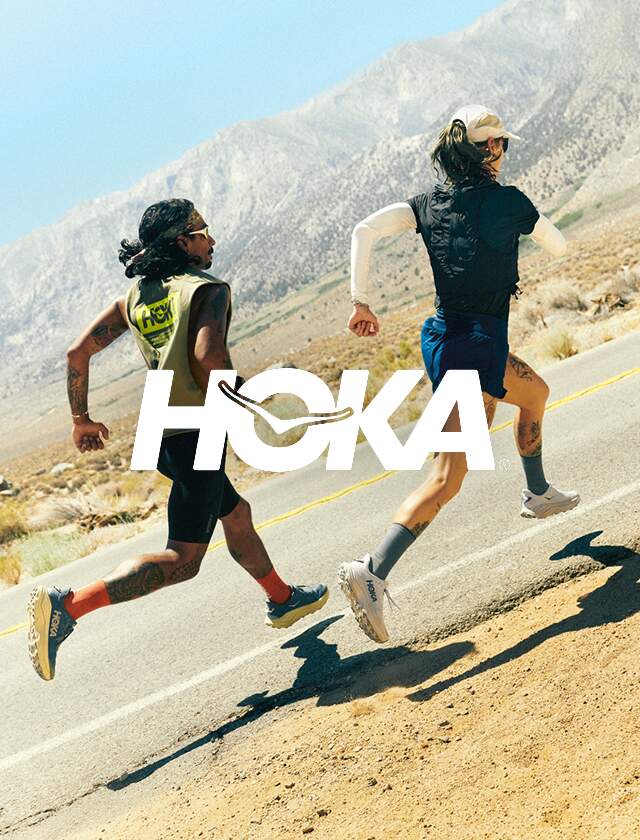
Which Cushioned Hoka Is Right For You?
Both the Bondi 9 and Clifton 11 are neutral running shoes from Hoka, and both use the brand's signature thick midsole, but they're built for different paces and different miles. Here's how they compare, plus where the Clifton Pro and Clifton GTX fit into the wider Clifton family.
What's the Difference Between the Hoka Bondi and Clifton?
The short answer: stack height and weight. The Bondi 9 is Hoka's maximum-cushion daily shoe, built with more foam underfoot for a softer, plusher ride. The Clifton 11 is lighter and lower to the ground, built as an everyday trainer that can handle a wider range of paces.
Both shoes are neutral, meaning neither has built-in support for runners who overpronate (where the foot rolls inward more than usual through the stride). Both use a rockered sole shape that Hoka calls Meta-Rocker, designed to roll your foot smoothly from heel to toe. The difference comes down to how much foam sits between your foot and the road, and how that changes the feel of every stride.
The Bondi 9 has a 5mm drop (the height difference between the heel and forefoot) and weighs around 263g (9.3oz) in a men's UK size. The Clifton 11 has an 8mm drop and typically weighs around 232g (8.2oz) to 280g (9.9oz), depending on size and gender. That extra Bondi cushioning adds weight, which is the trade-off for more shock absorption on tired legs.

Hoka Bondi 9: Maximum Cushioning for Daily Miles
The Bondi 9 is one of the most cushioned shoes in Hoka's road range. It's built on a full-length compression-moulded midsole, with a taller stack height than the Clifton, giving a soft, plush ride from the first step. The upper uses an engineered mesh with a 3D-moulded collar and a memory foam ankle cradle, so the shoe feels supportive without feeling stiff.
Durabrasion rubber sits in the high-wear zones of the outsole, which keeps the shoe holding up under regular use even though it's a soft-riding shoe. An internal heel counter locks the foot in place, and the early-stage Meta-Rocker geometry helps you roll forward smoothly despite the shoe's height.
Who it suits:
- New-to-running 5K starters who want a forgiving first shoe with plenty of protection underfoot
- Marathon and ultra road racers who need extra cushioning for the final miles of a long run
- General fitness runners and gym-goers who spend a lot of time on their feet and want comfort over speed
- Anyone recovering from a hard training block who wants a shoe built for easy, low-impact days
What it's not built for: fast sessions. The extra height and weight make the Bondi 9 feel less responsive than the Clifton when you pick up the pace, so most runners keep it for easy runs and daily mileage rather than tempo work or races.
Hoka Clifton 11: The Everyday Trainer That Does It All
The Clifton 11 is Hoka's flagship neutral trainer, and it's built to cover a much wider range of paces than the Bondi. It runs on a full-length compression-moulded EVA midsole with an 8mm drop and a lower stack height than the Bondi, which gives a lighter, quicker-feeling ride without losing much cushioning.
This latest version keeps the same proven midsole as the Clifton 10 and focuses its updates on the upper: a softer engineered mesh with a refined sockliner for extra step-in comfort. The Active Foot Frame cradles the heel within the midsole for added stability, and the Smooth MetaRocker shape supports a fluid transition through the stride. A Durabrasion rubber outsole adds grip and durability where the shoe meets the road most.
Who it suits:
- Time-pressed urban commuter runners who need one shoe for easy runs, faster efforts, and everything between
- Half-marathon improvers building weekly mileage who want a reliable daily trainer
- Performance-driven club runners looking for a lighter option than max-cushion shoes for regular sessions
- Beginner trail explorers and hybrid or Hyrox athletes who want a versatile shoe for mixed training
What it's not built for: the softest possible landing. If your priority is maximum shock absorption for very long runs or recovery days, the Bondi 9 will feel more forgiving underfoot.
Meet the Rest of the Clifton Family
The Clifton 11 isn't the only version of the Clifton available. Hoka builds two other versions of the platform for runners who want something more specific.
Hoka Clifton Pro: The Clifton With More Energy
The Clifton Pro takes the familiar Clifton platform and swaps in a new midsole foam: PROGLIDE+, a supercritical foam that's more responsive and bouncy than the standard EVA used in the Clifton 11. Stack height sits close to the Clifton 11's at roughly 42mm heel and 34mm forefoot for men's sizing, with the same 8mm drop, but the livelier foam and a more pronounced rocker shape give it a smoother, more propulsive feel through each transition.
There's no carbon plate in the Clifton Pro. Instead, it's built as a step up from a standard daily trainer, giving faster club runners and marathon racers a shoe that can handle both easy miles and quicker sessions without needing a race-day shoe. Weight sits at around 286g (10oz) for a men's UK 9, only slightly heavier than the Clifton 11.
Who it suits: performance-driven club runners who want more energy return from a daily trainer, and marathon or half-marathon runners looking for a shoe that bridges the gap between easy-run comfort and tempo-day pace.

Hoka Clifton GTX: Built for Wet Weather
The Clifton GTX adds a GORE-TEX Invisible Fit upper to the Clifton platform, giving the same cushioned ride with waterproof, windproof protection built in. The closed-mesh upper keeps water out while still allowing the shoe to breathe, and weather-ready traction pods on the outsole add grip on wet or slick surfaces. A fully gusseted tongue and 360-degree reflective details round out the weatherproofing, useful for early-morning or evening runs through darker months.
Stack height and drop sit closer to earlier Clifton generations at 5mm, giving a slightly different underfoot feel to the current 8mm-drop Clifton 11, though the cushioned, rockered ride stays consistent with the rest of the family.
Who it suits: commuter runners who run through all weather regardless of the forecast, and any runner based somewhere with regular rain who wants one dependable shoe for wet-road miles rather than swapping shoes by forecast.
Hoka Bondi 9 vs Clifton 11: The Numbers
.png/jcr:content/renditions/cq5dam.web.480.480.png?v=1789487207761&imgeng=/w_480)
The Bondi 9 is the softer, more protective option built for comfort over speed. The Clifton 11 is the more versatile daily trainer. The Clifton Pro adds energy for runners who want a livelier ride, and the Clifton GTX keeps the Clifton feel going when the weather turns.
How Does the Ride Actually Feel Different?
Numbers on a spec sheet only tell part of the story, so here's what that difference feels like underfoot.
Step into the Bondi 9 and the first thing you notice is the height. It's one of the taller shoes in Hoka's road range, and that extra foam gives a soft, almost cushioned-slipper feel from the first stride. The trade-off is responsiveness: because there's more material to compress before you feel the ground, the Bondi doesn't want to move quickly. It's built for a steady, unhurried pace, which is exactly why marathon and ultra runners reach for it on long training days when leg fatigue is the main concern.
The Clifton 11 sits lower and feels noticeably lighter on foot. There's still plenty of cushioning underfoot, but the lower stack and reduced weight mean the shoe reacts faster when you pick up the pace. Runners moving between easy jogs and quicker efforts in the same week tend to prefer this responsiveness, since it means fewer shoe changes across a training block.
The Clifton Pro sits closer to the Clifton 11 in height but feels noticeably springier thanks to its PROGLIDE+ foam. Reviewers consistently describe it as smoother through the transition from heel to toe, with the more pronounced rocker doing extra work to roll the foot forward. It won't replace a dedicated racing shoe, but it closes some of the gap between a standard daily trainer and something built for speed.
The Clifton GTX rides closest to the classic Clifton feel, since it's built on an earlier Clifton platform with a 5mm drop rather than the current 8mm. The main difference you'll notice isn't underfoot at all: it's how the upper handles wet weather, staying dry inside while still letting your foot breathe.

What Should Beginners Look for in a Cushioned Running Shoe?
More cushioning doesn't always means more comfort, but the right amount depends on what you're using the shoe for. A shoe with too much stack height can feel unstable for runners still building strength and balance, while one with too little cushioning can feel harsh on early runs. The Clifton 11 is a solid starting point for most new runners: enough cushioning to protect the legs, without the height and weight of the Bondi. Runners who find their legs are sore after runs, or who are building up mileage slowly, often prefer the extra protection of the Bondi 9 instead.
How to Choose Between the Bondi and Clifton
Here's a simple way to decide:
- Want the softest possible ride for easy miles and recovery days? Choose the Bondi 9.
- Want one shoe that copes with easy runs and faster sessions? Choose the Clifton 11.
- Want a livelier, more responsive daily trainer with the same protective platform? Choose the Clifton Pro.
- Run in wet weather regularly and want built-in waterproofing? Choose the Clifton GTX.
- New to running and not sure where to start? The Clifton 11 gives a balanced introduction to cushioned running without the extra height of the Bondi.
The Bondi 9 and Clifton 11 both come from Hoka's neutral, cushioned line-up, but they're built for different runs. The Bondi is the softer, heavier shoe for easy miles and recovery. The Clifton is the lighter, more versatile daily trainer built to cover a wider range of paces. Beyond the two, the Clifton Pro brings a livelier ride for runners who want more energy from their daily trainer, and the Clifton GTX carries the Clifton platform into wet-weather running with a waterproof upper.
If you're still not sure which one matches your stride, book a gait analysis appointment at your local Runners Need store and try a few pairs on before you decide.
Related Articles
Let us know you agree to cookies
We use marketing, analytical and functional cookies as well as similar technologies to give you the best experience. Third parties, including social media platforms, often place tracking cookies on our site to show you personalised adverts outside of our website. We store your cookie preferences for two years and you can edit your preferences via ‘manage cookies’ or through the cookie policy at the bottom of every page. For more information, please see our cookie policy.