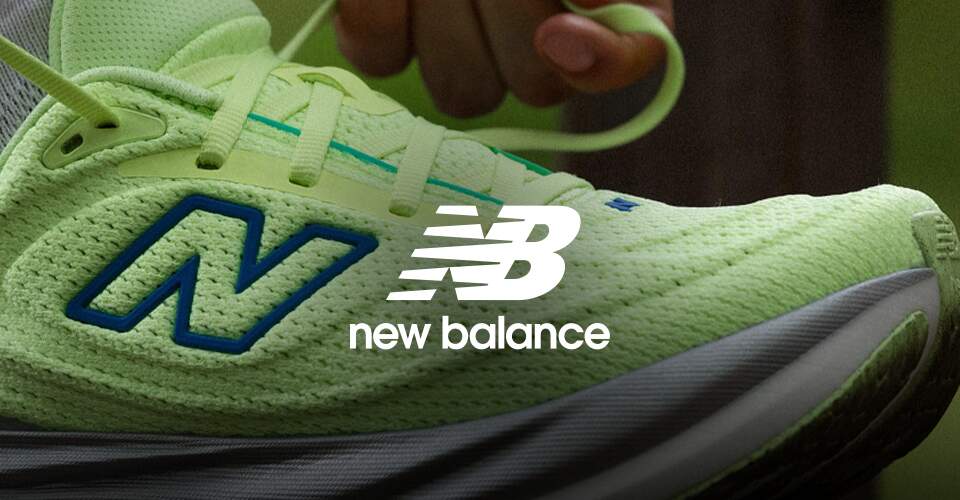
The New Balance 1080 and New Balance 880 are both neutral daily trainers built for easy and steady road miles. Both shoes share a 6mm drop, the height difference between the heel and the forefoot. The updated versions moved the shoes closer together than ever. The 880 grew taller and heavier making it the firmer, steadier shoe. The 1080 became the softer, lighter and bouncier shoe, swapping its Fresh Foam midsole for a new foam called Infinion.
How the 880 and 1080 Swapped Places
For years, the New Balance 880 played the sensible role. It was the firmer, lower, budget-friendly trainer, while the New Balance 1080 was the plush flagship. The launch of the new versions shuffled that order.
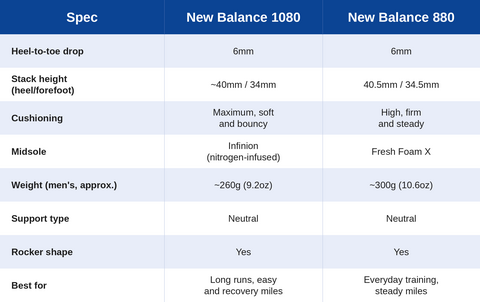
The 880 now stands 40.5mm tall at the heel, which is fractionally taller than the 1080 at around 40mm. Stack height is the thickness of foam between your foot and the ground. The 880 also gained roughly 40g over its previous version, mostly because of that taller stack.
The 1080 went the other way. It lost around 39g in men's size 9 and dropped the Fresh Foam name. Its new Infinion midsole is made by infusing nitrogen into the foam under pressure. That process creates a lighter, livelier material than the old Fresh Foam.
Here is what the two shoes still share:
- Neutral support for runners who do not need built-in stability
- A 6mm drop, so switching between them rarely needs an adjustment period
- A heel stack of around 40mm and a forefoot stack of around 34mm
- A rocker shape, a gently curved sole that helps your foot roll forward from landing to toe-off
- Road-focused outsoles with reliable grip on pavements and park paths
Where the Two Shoes Still Differ
The 1080's Infinion foam feels softer on landing and returns more bounce. Reviewers say the springy feel holds up as the miles build, where older foams can go flat. The 880's Fresh Foam X feels firmer and more grounded. Testers who tried both found the 880 much firmer, even though the two shoes share a similar shape.
The 880 weighs around 300g in men's size 9. Reviewers measure the 1080 at roughly 260g. A 40g gap is easy to ignore on a 5K and easy to notice at mile 15.
The 1080 has an RRP of £169.95 and the 880 has an RRP of £139.95. Sale prices change often, so check the live price on each product page.
Spec Sheet: 1080 vs 880
Three Runs, Two Shoes
Spec sheets only go so far. Here is how each shoe handles three typical runs.
Tuesday: the wet commute. Five miles to work through drizzle, with traffic lights, kerbs and a rucksack. The 880's steady, firm feel suits stop-start running on hard pavements. Testers also rate its outsole grip highly on damp surfaces. Pick: 880.
Saturday: parkrun and a coffee. A 5K on park paths, with a mix of paces and a few hills. Both shoes cope well. The 1080 feels livelier when you push for a personal best because it weighs less. The 880 feels more grounded if you prefer to feel the path. Pick: either, with a lean towards the 1080 if you chase times.
Sunday: the long run. Fourteen miles along a canal towpath. The surface is flat, hard and unforgiving, and fatigue builds after the first hour. The 1080's softer landing and lighter weight earn their keep here. Pick: 1080.
Which Runner Are You?
Choose the 1080 if you are:
- A half-marathon improver who runs long on Sundays and wants a soft, light landing
- A marathon or ultra road racer logging big weekly mileage who wants cushioning that stays lively
- A hybrid or Hyrox athlete who runs between heavy gym sessions and wants a softer shoe for tired legs
- A general fitness runner who values a plush feel over a firm one
Choose the 880 if you are:
- A new-to-running 5K starter who wants a steady, well-cushioned first shoe at a lower price
- A time-pressed urban commuter runner who wants grip and a dependable feel on wet pavements
- A performance-driven club runner who wants a firmer shoe for easy and steady sessions
- A general fitness runner who prefers a grounded ride
A note for trail runners: Neither shoe suits mud, roots or steep descents. Beginner trail explorers who stay on towpaths and gravel paths can use either one. Mountain and fell runners and ultra-trail athletes should look at trail running shoes instead.

The Shop Floor Test
Trying both shoes takes five minutes and tells you more than any review. Here is what to check:
- Check the heel. Lace up fully. Your heel should sit still when you walk, with no slipping.
- Check the toes. Leave about a thumb's width of space beyond your longest toe, and make sure the toes can spread.
- Walk, then jog. Pay attention to how the rocker rolls you forward. A good match feels smooth, not forced.
- Compare soft and firm. Wear a 1080 on one foot and an 880 on the other if the store allows. The difference in bounce shows up in seconds.
- Ask for a gait analysis. A gait analysis watches how your foot lands and rolls, and confirms whether a neutral shoe suits you.
Our team at your local Runners Need store can run you through all five.
The Quick Recap
The 1080 is lighter, softer and bouncier, which suits long runs and high mileage. The 880 is firmer, steadier and cheaper, which suits everyday training and first-time buyers. Both are neutral road shoes with a 6mm drop and generous cushioning.
Shop the New Balance 1080 and New Balance 880 at Runners Need, or book a gait analysis appointment to try both on before you decide.
FAQs
No. Both the 1080 and 880 are neutral shoes. Neither is built with the firm inner-side foam or support rails found in stability shoes, which are made to limit inward foot roll. Reviewers praise the 880's lateral stability, meaning it resists side-to-side wobble, but that is different from correcting overpronation. Some runners with mild overpronation and no pain run comfortably in neutral shoes. Runners with moderate or strong overpronation usually do better in a stability shoe.
They can be, depending on how your foot behaves when you run. Flat feet do not automatically mean overpronation. Plenty of flat-footed runners land fairly evenly and run happily in neutral, cushioned shoes like these. Neither shoe has built-in arch correction. If your arches collapse and your feet roll inward heavily, a stability shoe is usually the better choice.
Yes. Both shoes have generous cushioning and a rocker shape that rolls your foot forward, which suits long walks and days on your feet. The lighter, softer 1080 tends to suit long days best. The firmer 880 suits walkers who prefer a steady, grounded feel. Both are built as running shoes, so expect road-ready grip rather than waterproofing.
Yes, for most runners. Reviewers describe both shoes as true to size in length. The 1080 fits snugly and has a slightly long, narrow shape at the toe. Some testers found the toe a little long. The 880 has a secure midfoot and a toe box with solid width and height, although the midfoot is relatively narrow.
Yes. The 880 offers generous cushioning, a steady feel and good grip at a lower price than the 1080. New runners who want maximum softness can still choose the 1080, so try both on if you are unsure.
Related Articles
Let us know you agree to cookies
We use marketing, analytical and functional cookies as well as similar technologies to give you the best experience. Third parties, including social media platforms, often place tracking cookies on our site to show you personalised adverts outside of our website. We store your cookie preferences for two years and you can edit your preferences via ‘manage cookies’ or through the cookie policy at the bottom of every page. For more information, please see our cookie policy.