
Two Icons, Two Very Different Rides
The Vomero and Pegasus sit at opposite ends of Nike's daily trainer range, and both come from decades of runner feedback. The Vomero is Nike's max-cushion option, built for soft landings and easy miles. The Pegasus is the firmer, more versatile all-rounder that copes with everything from a Sunday jog to a tempo session. Here's what separates the two, plus where the Vomero Plus and Pegasus Plus fit into each family.
Same Brand, Different Feeling Underfoot
Both the Nike Vomero and Pegasus are neutral trainers, meaning neither corrects overpronation (where the foot rolls inward more than it should through the stride). If a gait analysis has flagged a support need, that's a separate shoe category entirely. Past that starting point, the Vomero and Pegasus part ways on cushioning and purpose.
The Vomero prioritises comfort above all else. It stacks Nike's softest foam as high as the shoe allows, so easy runs and recovery days feel properly easy. The Pegasus prioritises versatility. It carries enough cushioning for daily mileage but stays lower and firmer, so it doesn't feel out of place when the pace picks up. Put simply: reach for the Vomero when comfort is the goal, and reach for the Pegasus when you want one shoe that handles most of your running week.

Nike Vomero: Maximum Cushioning for Every Easy Mile
The Vomero runs a properly tall stack, with roughly 46mm under the heel and a 10mm drop, putting the forefoot around 36mm. That's the highest stack height the Vomero line has carried to date. Weight sits around 325g (11.5oz) for a men's UK 9, which is on the heavier side for a daily trainer, and that extra material is exactly what delivers the plush ride.
Underfoot, a dual-density midsole stacks lightweight ZoomX foam on top of ReactX foam. ZoomX is Nike's softest, most energy-returning foam, and ReactX sits underneath for durability and a stable base. Nike states the ReactX formula is 13% more responsive than the React foam it replaced. A redesigned traction pattern and rubber pods around the outsole smooth out the transition from heel strike to toe-off, while the engineered mesh upper keeps things breathable without feeling flimsy.
Who the Vomero suits:
- General fitness runners and gym-goers who spend most sessions at an easy, conversational pace
- Marathon and ultra road racers who want a dedicated recovery-day shoe to protect tired legs
- New-to-running 5K starters who find extra cushioning noticeably more comfortable while building a base
- Half-marathon improvers stacking up weekly mileage who need a softer landing on longer runs
Where it falls short: speed. The extra foam and weight make the Vomero feel noticeably less lively than the Pegasus once you pick up the pace, so most runners keep it for easy days and long runs rather than intervals.
Nike Pegasus: A Daily Trainer Built to Do It All
The Pegasus runs a lower, more balanced stack of around 37mm heel and 27mm forefoot, keeping the same 10mm drop as the Vomero. Weight drops to roughly 300g (10.6oz) for a men's UK 9, around 25g lighter than the Vomero, and that difference is noticeable within the first few strides.
The headline update is a full-length Air Zoom unit, replacing the separate heel and forefoot pods used in the previous Pegasus model. Nike describes it as delivering the model's highest energy return yet, with a propulsive feel that carries from landing through to toe-off. It sits on top of the same ReactX foam midsole found in the Vomero, so the two shoes actually share their base cushioning technology. The fit has also been widened through the forefoot and toe box, giving toes more room to splay naturally, and a Waffle-inspired rubber outsole with flex grooves adds grip and natural bend underfoot.
Who the Pegasus suits:
- Time-pressed urban commuters who want one shoe that handles a fast commute and a relaxed weekend run
- Performance-driven club runners who need a reliable daily trainer that still copes with tempo efforts
- Hybrid and Hyrox athletes who want a shoe versatile enough for varied training sessions
- Half-marathon improvers who want cushioning without losing the ground feel needed for speed work
Where it falls short: if your priority is the softest possible landing on tired legs, the Pegasus will always feel firmer and lower than the Vomero, by design.
Vomero vs Pegasus: The Numbers Side by Side
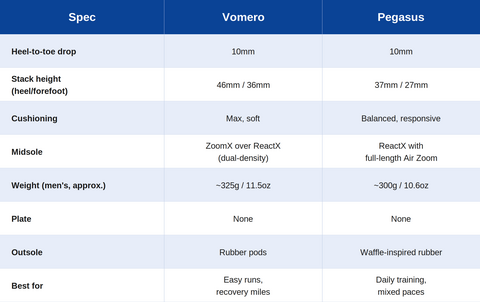
The Vomero carries roughly 25g more per shoe and close to 10mm more stack height, all spent on cushioning. The Pegasus stays closer to the ground and trades some of that softness for a livelier, more adaptable ride.
Meet the Plus Versions: Vomero Plus and Pegasus Plus
Neither family stops at the standard model. Nike also builds a Plus version of each shoe, aimed at runners who want the same character with less weight and more energy return.
Nike Vomero Plus: The Lighter, Softer Upgrade
The Nike Vomero Plus swaps the Vomero's dual-density setup for a full-length ZoomX midsole, Nike's most responsive foam used on its own rather than paired with ReactX. Stack height runs around 45mm with the same 10mm drop, but weight drops to roughly 292g (10.3oz), close to 30g lighter than the Vomero despite a similarly tall stack. That combination gives a softer, springier ride that still feels quick underfoot, plus webbed lace loops and reflective details for an adjustable, visible fit.
It suits marathon and ultra road racers who want Vomero-level protection without the extra weight over 26.2 miles, and general fitness runners who log high weekly mileage and want the most energy-returning foam Nike makes.
Nike Pegasus Plus: The Quicker, Livelier Pegasus
The Nike Pegasus Plus takes the Pegasus name in a different direction. Weight falls to around 265g (9.3oz), roughly 35g lighter than the standard Pegasus, thanks to a sleeker, lighter mesh upper and a midfoot containment band that replaces some of the mesh for extra breathability and hold. Underfoot, it moves away from ReactX entirely in favour of ZoomX foam paired with an exposed Air Zoom unit, visible through the outsole for a more propulsive, ground-contact feel. A curved geometry and waffle flex zones are built for smoother, quicker transitions.
It's built to act as a go-to super trainer for easy runs, tempo sessions and everything between. It suits performance-driven club runners who want a race-day-adjacent feel for hard training days, and Hyrox athletes who need a shoe that stays light and responsive across mixed-effort sessions.
How Each Shoe Feels Once You're Running
Step into the Vomero and the softness is immediate. The tall ZoomX layer compresses generously under the heel, and the ReactX base stops that softness from feeling unstable. It rewards a steady, relaxed pace rather than sudden surges, which is exactly why it earns its place as a recovery and long-run shoe.
The Pegasus feels noticeably more connected to the ground from the first stride. The full-length Air Zoom unit gives a springier, more energetic sensation at toe-off than the flatter ReactX-only feel of older Pegasus models, without tipping into the bouncy, unstable territory some max-cushion shoes fall into. It's the shoe most runners could comfortably wear every day without needing a second pair.
The Vomero Plus feels closer to the Vomero at rest but noticeably lighter once moving, with ZoomX's energy return showing through more clearly without ReactX underneath to dampen it. The Pegasus Plus is the most race-adjacent shoe of the four, with the exposed Air Zoom unit giving a firmer, snappier pop that suits faster efforts better than easy jogs.

New to Nike Running Shoes? Start Here
If you're buying your first proper running shoe, more cushioning doesn't automatically mean more comfort. A very tall stack, like the Vomero's 46mm, can feel unstable for runners who are still building strength and balance through the ankle and foot. A firmer, lower shoe like the Pegasus often gives new runners better ground feel while they adjust.
That said, plenty of beginners get on well with extra cushioning from day one, particularly if previous shoes have felt harsh.
Quick Pick: Which Nike Running Shoe Should You Choose?
- Want one shoe for daily miles and the occasional faster session? Choose the Pegasus.
- Want the softest possible ride for easy runs and recovery days? Choose the Vomero.
- Training for a marathon and want the lightest version of that comfort? Choose the Vomero Plus.
- Want a livelier, race-day-adjacent feel for tempo and Hyrox training? Choose the Pegasus Plus.
- New to running and not sure where to start? The Pegasus gives a balanced introduction without the height of the Vomero.
The Vomero and Pegasus both come from Nike's road running range, but they're built for different days on your training plan. The Vomero line trades weight for comfort, and the Pegasus line trades some softness for versatility and speed.
If you're still unsure which one matches your stride, book a gait analysis at your local Runners Need store and try all four on before you commit.
FAQs
The Pegasus generally suits beginners better, since its lower, firmer ride gives more ground feel while new runners build strength and balance. The Vomero isn't off-limits for beginners, but its taller stack height can feel less stable underfoot until you've built up some running experience.
The Vomero uses a dual-density midsole with ZoomX foam stacked on ReactX foam, while the Vomero Plus uses ZoomX foam on its own through the full length of the shoe. That makes the Vomero Plus around 30g lighter with a springier ride, at a higher price point than the standard Vomero.
No. They share the Pegasus name and a similar 10mm drop, but the Pegasus Plus uses ZoomX foam and an exposed Air Zoom unit rather than the Pegasus's ReactX and enclosed Air Zoom setup. The Plus is lighter and more responsive, built for faster training days rather than everyday mileage.
The Vomero carries the tallest stack height of the four, at around 46mm under the heel, making it Nike's softest daily trainer currently in the Runners Need range.
Yes. The Pegasus is built as a versatile daily trainer rather than a race shoe, but its lower stack and full-length Air Zoom unit mean it holds up well during tempo efforts and shorter races. For marathon or half-marathon race day, most runners still prefer a dedicated carbon-plated racing shoe.
Related Articles

Let us know you agree to cookies
We use marketing, analytical and functional cookies as well as similar technologies to give you the best experience. Third parties, including social media platforms, often place tracking cookies on our site to show you personalised adverts outside of our website. We store your cookie preferences for two years and you can edit your preferences via ‘manage cookies’ or through the cookie policy at the bottom of every page. For more information, please see our cookie policy.